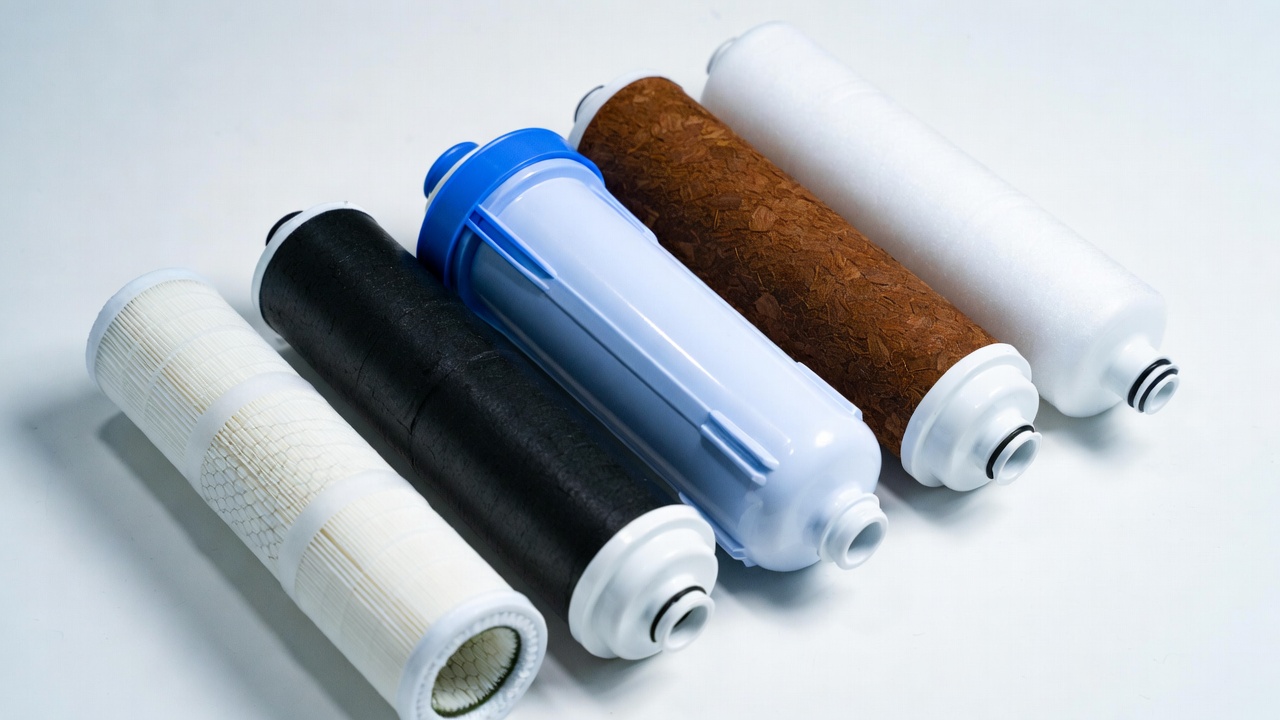
Stage-by-stage replacement schedule, brand-specific filter packs, real annual costs, and the universal vs branded filter question — answered honestly.
Reverse osmosis filters need regular replacement to keep your water clean and your system performing the way it did on day one. The schedule varies by stage and by brand — and the most expensive mistake people make is buying the wrong filter pack for their system. This guide breaks down everything: when to replace each stage, what to expect to spend annually, brand-specific filter pages for the major systems, and the honest answer on whether you can save money with universal filters.
If you already know your system brand, jump straight to the brand-specific replacement schedule and filter pack page. Each one covers the right ASIN to order, the exact replacement timing for that model, and how to reset filter indicators.
Most under-sink RO systems run 4 or 5 stages. Each stage has a specific job, a different lifespan, and a different replacement cost. Understanding what each one does makes it easier to recognize when something's wrong and decide whether to replace one or the whole pack.
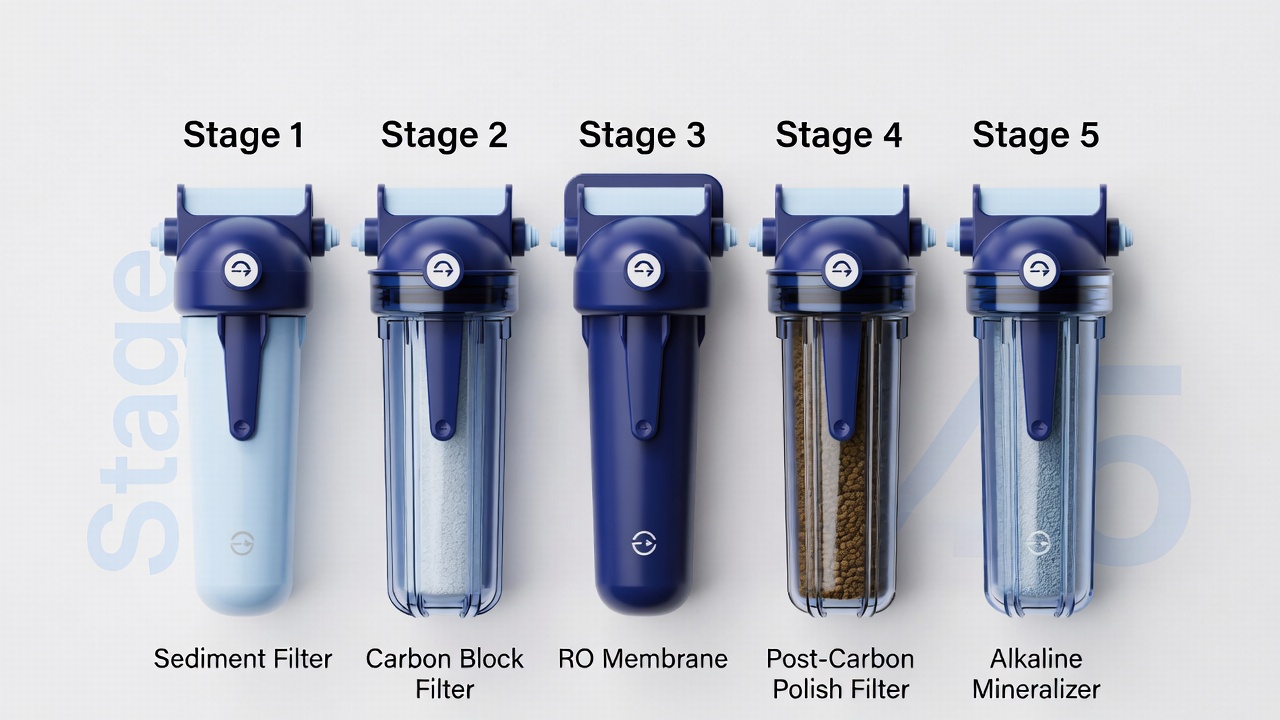
| Stage | Job | Replace every |
|---|---|---|
| Stage 1: Sediment | Catches sand, rust, dirt, particles down to 5 microns | 6-12 months |
| Stage 2: Carbon block | Removes chlorine, chloramines, taste and odor | 6-12 months |
| Stage 3: RO membrane | Removes 95-99% of dissolved solids, fluoride, lead, PFAS | 2-3 years |
| Stage 4: Post-carbon polish | Final taste polish, removes any residual carbon dust | 12 months |
| Stage 5: Remineralization | Adds back calcium, magnesium for taste and pH (optional) | 6-12 months |
The RO membrane is the workhorse — it does the actual reverse osmosis filtration. The pre-filters (Stages 1-2) exist to protect it from chlorine and sediment that would foul or damage it. Skip the pre-filter replacements and the membrane fails within months instead of years.
Calendar replacement is a good baseline, but actual usage varies by household. Heavy water consumption shortens filter life; light usage extends it. These four warning signs tell you replacement is needed regardless of date:
A handheld TDS meter ($15 on Amazon) is the single most reliable diagnostic tool. A working RO system should produce water under 50 PPM. Climbing readings mean the membrane is failing.
If filling a glass takes longer than it used to, the pre-filters are clogging up. Replace them before the slowdown gets worse — running a clogged pre-filter accelerates membrane wear.
Chlorine taste means the carbon block is exhausted. Metallic or earthy taste means the membrane is letting solids through. Either way, replace immediately.
Modern systems track gallons used and trigger an indicator when it's time. AquaTru, Waterdrop tankless, and most newer systems do this automatically. Listen to it.
This is the question that costs people hundreds of dollars a year either way. The honest answer depends on which stage and which system.
| Filter type | Universal compatible? | Why |
|---|---|---|
| Standard 10" sediment | Yes, usually | Standard size used by APEC, iSpring, Express Water, generic systems |
| Standard 10" carbon block | Yes, usually | Same housing standard. Pentek, Watts, generic carbon blocks fit most |
| RO membranes | Sometimes | Standard 50/75/100 GPD membranes fit most generic housings. Tankless system membranes are usually proprietary |
| AquaTru filters | No | Twist-in proprietary cartridges. Only AquaTru filters fit AquaTru |
| Waterdrop tankless filters | No | G3P600, G3P800, N1 use proprietary slot cartridges. Brand-only |
| Frizzlife tankless filters | No | PD600 and similar models use proprietary cartridges |
The trade-off with universal filters: cost savings of 30-50% but no NSF certification verification on the specific filter, and warranty implications. For traditional under-sink systems with standard 10-inch housings (APEC, iSpring, Express Water), universal filters from Pentek, Watts, or quality generic brands work fine and save real money over years. For tankless and countertop systems with proprietary cartridges, brand filters are the only legitimate option.
The sticker price of an RO system is only half the story. Here's what each major system actually costs to keep running over a typical year, including pre-filters and post-filters but assuming the membrane is in its multi-year lifespan (membrane replacement adds $40-80 amortized annually).
| System | Annual cost | 5-year filter total |
|---|---|---|
| APEC ROES-50 | $50-70 | ~$300 |
| iSpring RCC7AK | $60-80 | ~$350 |
| Express Water RO5DX | $60-90 | ~$370 |
| AquaTru Classic | $100-120 | ~$550 |
| AquaTru Carafe | $80-100 | ~$450 |
| Waterdrop G3P600 | $130-150 | ~$700 |
| Frizzlife PD600 | $120-140 | ~$650 |
APEC and iSpring win on long-term filter costs because they use standard 10-inch housings — the entire industrial filter supply chain works for them. Tankless and countertop systems carry the convenience tax of proprietary cartridges. Whether that premium is worth it depends on how much you value compact size, automatic indicators, and faster flow rates.
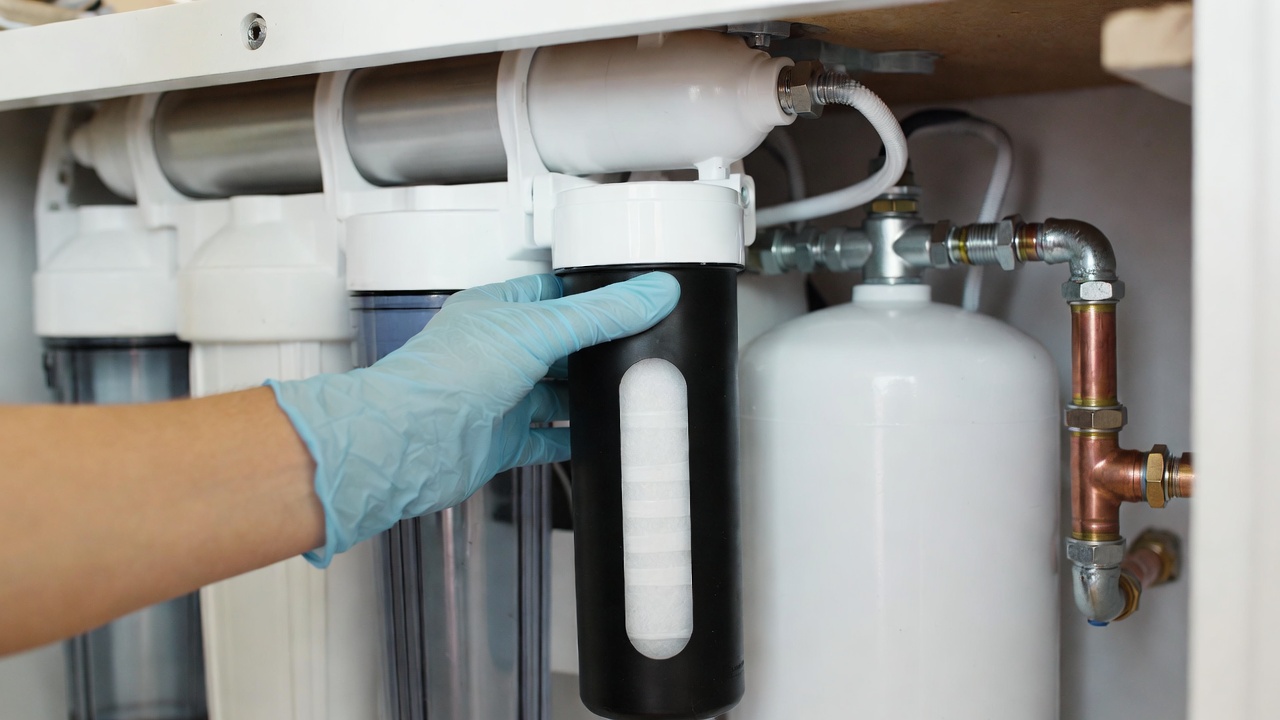
Replacement procedures vary by system, but the general workflow is the same across most RO units. For brand-specific instructions with photos, see your system's replacement page linked above.